The list price is not the real cost
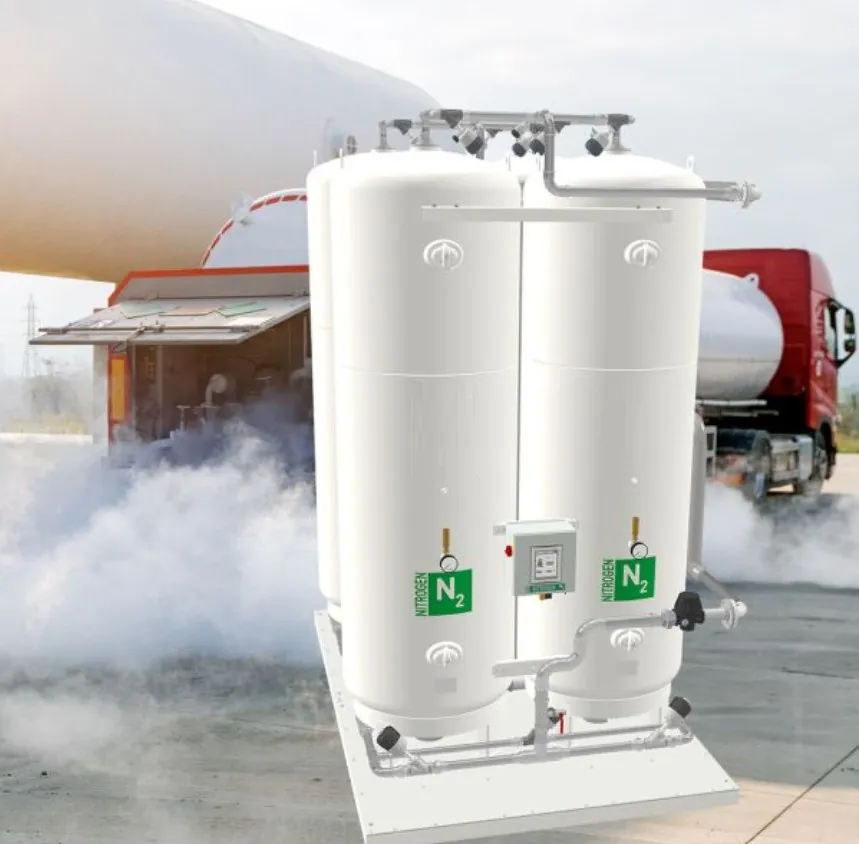
The price per Nm³ in a liquefied gas contract rarely matches what the plant pays for each Nm³ that reaches the point of use. Between one figure and the other there are three costs that almost never enter the comparison:
- Transport. Each delivery adds haulage, ADR surcharges and indexed energy or fuel surcharges that the customer does not control.
- Equipment rental. The cryogenic tank, vaporiser and telemetry are billed as a fixed monthly fee, whether consumption is high or low.
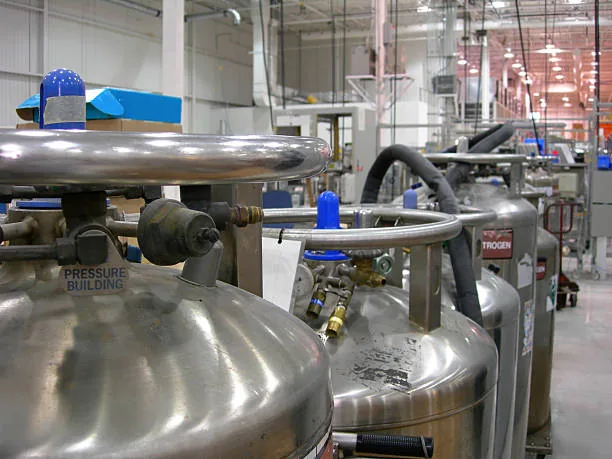
- Boil-off. Liquid nitrogen is stored at −196 °C and oxygen at −183 °C. Heat entering the tank evaporates part of the product and, with low or irregular consumption, that gas is vented to atmosphere: it has been paid for and not used.
As a result, many plants compare on-site generation with a list price that does not reflect what they spend. This article proposes a calculation method any plant manager can apply with the last twelve months of invoices.
How to calculate the real cost of cryogenic supply
The four items on the invoice
- Gas: amount billed for the product over the year.
- Fixed fees: rental of the tank, vaporiser and telemetry.
- Logistics: haulage per delivery, ADR surcharges and energy surcharges.
- Losses: gas bought that boils off and is vented before reaching the process.
The formula
The key is the denominator. It must be the volume measured at the point of use with a flowmeter, not the volume bought. The difference between the two is the loss, and dividing by real consumption automatically includes it in the cost.
Three checks before calculating
- Units. If the invoice is in litres of liquid or in kilograms, convert it: 1 litre of liquid N₂ is about 0.65 Nm³ of gas and 1 kg of N₂ about 0.80 Nm³. For O₂, 1 litre of liquid is about 0.80 Nm³ and 1 kg about 0.70 Nm³.
- Reference conditions. The Nm³ is defined at 0 °C and 1.013 bar. Some suppliers bill m³ at 15 °C, which are roughly 5 % “smaller”.
- Period. Use twelve full months to capture production seasonality and price revisions.
How PSA technology works
Pressure swing adsorption (PSA, Pressure Swing Adsorption) separates the gases in compressed air at ambient temperature, without liquefying anything. The filtered, dry air passes through a tower filled with a molecular sieve that retains one gas and lets the other through.
A different sieve for each gas
- Nitrogen: carbon molecular sieve (CMS) is used. Oxygen diffuses faster into its pores and is retained; nitrogen leaves as product, with standard purities of up to 99.999 %. When more is needed, PSA nitrogen (99.5–99.9 %) is purified in a palladium catalytic reactor with added hydrogen, which removes the residual oxygen and reaches 99.9999 %.
- Oxygen: zeolites are used, which preferentially adsorb nitrogen. Oxygen leaves as product together with the argon in the air, which puts purity at around 93–95 % (up to 94.5 % in our equipment).
The two-tower cycle
- Adsorption. One tower works under pressure and delivers product gas.
- Regeneration. The other is depressurised and releases the retained gas to atmosphere.
- Equalisation. Before switching, the towers equalise pressures and recover part of the compression energy.
The cycle repeats roughly every minute and the only significant consumption is the air compressor's electricity.
Where an energy saving of up to 18 % comes from
In a PSA plant, energy per Nm³ is not a constant: it depends on how the plant is designed and operated. With engineering tailored to the process, energy savings reach up to 18 %, from four levers:
- Purity matched to the real need. Each additional “nine” needs more compressed air per Nm³ produced. Generating at 99.9 % when the process accepts 99.5 % means paying for energy that adds no value.
- No change of state. The gas is produced at the pressure of use. There is no need to liquefy it at −196 °C, truck it and evaporate it again.
- Modularity and control. Modular units and variable-speed compressors follow demand and avoid hours of idle running.
- Condition of the adsorbent. A degraded sieve needs more air to maintain purity. Replacing or optimising the CMS (N₂) or zeolite (O₂) brings the generator back to its design consumption.
How to calculate the real cost of on-site PSA generation
The three items
- Energy: compressor kWh per Nm³ produced, multiplied by the electricity price. kWh per Nm³ follows from the air factor (Nm³ of air per Nm³ of gas, which rises with purity) and the compressor's specific consumption.
- Maintenance: filters, valves, compressor service and analyser calibration.
- Depreciation: investment in generator, compression, tanks and installation, spread over its service life.
Comparative example
Plant consuming 150,000 Nm³/year of N₂ at 99.9 % (25 Nm³/h for 6,000 hours). The figures are illustrative assumptions: replace them with your plant's.
| Item | Cryogenic supply | On-site PSA generation |
|---|---|---|
| Gas or energy | €25,263 (157,895 Nm³ bought) | €6,930 (57,750 kWh) |
| Fixed fees or depreciation | €5,400 | €6,000 |
| Logistics or maintenance | €2,160 | €3,500 |
| Annual cost | €32,823 | €16,430 |
| Real cost per Nm³ consumed | €0.22 | €0.11 |
Cryogenic assumptions: €0.16/Nm³ list price, 5 % boil-off loss, €450/month rental and 24 deliveries with €90 of haulage and surcharges. PSA assumptions: air factor of 3.5, compressor at 0.11 kWh per Nm³ of air, electricity at €0.12/kWh and a €60,000 investment depreciated over 10 years, with no financing costs.
In this scenario, the real cost of cryogenic supply is 37 % above its list price. On-site generation halves the cost per Nm³ and the investment is recovered in about 2.7 years.
When it does not pay off
The result is not universal. With very low consumption, flow peaks far above the average or purities beyond what PSA achieves efficiently, liquid may remain the best option or the right backup. That is why the calculation must be made with measured data, not catalogue values.
Safety and regulatory compliance
Generating gas on site removes the risks specific to cryogenic liquid (cold burns, tanker unloading and large stored inventories), but the generator must be integrated into the plant's quality and safety systems.
Food industry: ISO 22000
- The generator is incorporated into the food safety management system (ISO 22000) and its hazard analysis (HACCP) as one more controlled process.
- Nitrogen in contact with food is the additive E 941. Regulation (EU) No 231/2012 requires a minimum purity of 99 %, with a maximum of 1 % oxygen.
- A continuous purity analyser with data logging provides the traceability audits require. Inlet compressed-air quality is specified to ISO 8573-1.
Pharmaceutical industry: European Pharmacopoeia
- Nitrogen: the monograph requires a content ≥ 99.5 % and also O₂ ≤ 50 ppm, CO₂ ≤ 300 ppm, CO ≤ 5 ppm and water ≤ 67 ppm. With a PSA generator, the oxygen limit sets the design: residual O₂ ≤ 50 ppm (≥ 99.995 %).
- Oxygen 93 %: monograph 2455 sets a content of between 90.0 % and 96.0 %, the range in which PSA generators work (AEMPS).
- The installation must be qualified (IQ, OQ and PQ) and periodically verified against the applicable monograph.
Classified areas: ATEX
- In locations with potentially explosive atmospheres, equipment must be certified under Directive 2014/34/EU, and the installation must be included in the explosion protection document (Directive 1999/92/EC).
- Nitrogen is also a preventive measure: inerting reactors, silos and tanks keeps oxygen below the limit that allows combustion.
Risks specific to each gas
- Nitrogen: displaces the oxygen in air. Rooms require ventilation and ambient oxygen detection with alarm.
- Oxygen: intensifies combustion. Materials must be compatible and the installation free of oils and greases.
- Pressure: tanks and pipework are subject to Directive 2014/68/EU and, in Spain, the Pressure Equipment Regulation (Royal Decree 809/2021), with their periodic inspections.
Conclusion: calculate with your own data
The real cost per Nm³ is everything paid divided by what is actually consumed, and that figure is usually well above the list price of liquefied gas. On-site PSA generation turns a variable, third-party-dependent expense into a known cost, tied to electricity and plannable maintenance, with a lower carbon footprint by avoiding liquefaction and road transport.
To keep that cost steady over time, our GAS4U platform continuously monitors purity, pressure and component condition, and applies artificial intelligence to anticipate deviations before they affect production.
Want to know your plant's real cost per Nm³? Ask for a free energy audit and we will give you this same comparison calculated with your data.
Request an audit →References
- Commission Regulation (EU) No 231/2012, specifications for food additive E 941.
- AEMPS (Spanish Medicines Agency), information note MUH 05/2025 on oxygen 93 % generated on site.
- EDQM, European Pharmacopoeia oxygen monographs.