
Hard organic matter
It oxidises non-biodegradable COD and breaks complex molecules into smaller fragments that biological treatment can digest. Very useful in industrial water with persistent load.
Ozone is made by splitting oxygen molecules with an electrical discharge. With air, four fifths of the gas passing through the ozone generator is nitrogen: it takes up space, heats up, produces no ozone and forms nitrogen oxides as well.
With 90–95 % oxygen, almost all of the same discharge works on O₂. You get more ozone per kWh, the gas leaves far more concentrated, and the injector, contact tank and off-gas destructor can be sized smaller.
Ozone is one of the strongest oxidants that can be used in water. It leaves no chemical residue: whatever does not react turns back into oxygen. That is why it is a key tool in industrial and municipal wastewater treatment.
It oxidises non-biodegradable COD and breaks complex molecules into smaller fragments that biological treatment can digest. Very useful in industrial water with persistent load.
It attacks the parts of the molecule that give colour. One of its clearest applications in the textile, paper and food industries, and in yellowish treatment-plant effluents.
It oxidises phenols, cyanides, surfactants and other compounds that inhibit the biological stage or cannot be discharged.
In tertiary treatment it removes a large share of the micropollutants that pass through the biological stage. It is usually followed by a biological or activated carbon filter.
It inactivates bacteria, viruses and protozoa, including some resistant to chlorine, without forming the organochlorine by-products of chlorination. Key when water is to be reused.
It removes odorous compounds and, dosed into the sludge line, helps reduce its volume and control filamentous bacteria.
The dose is designed, not improvised. If the water contains bromide, an excessive ozone dose can form bromate. That is why dose, contact time and post-treatment are defined with trials and with the ozone generator manufacturer. We provide the oxygen that dose needs, with guaranteed purity and flow.
Cleaning and disinfection of barrels, tanks, pipes and bottling lines with no chemical residue to rinse off.
Washing fruit and vegetables, disinfecting surfaces and controlling moulds and odours in cold rooms.
Removal of iron, manganese, tastes and odours, and disinfection of process water.
Control of biofilm and legionella with fewer chemicals.
Disinfection and better water quality in recirculating systems.
Removing odours in rooms, treatment plants and industrial processes.
The oxygen generator uses the same control panel as our nitrogen generators: the same PLC, the same zirconia sensor and the same purity-control logic. It is not a one-off unit: it is a platform proven in dozens of plants.
The complete plant includes air treatment, the zeolite PSA generator, the analyser with three-way valve, the oxygen tank with its filter, and the pressure and flow regulation your ozone generator requires.
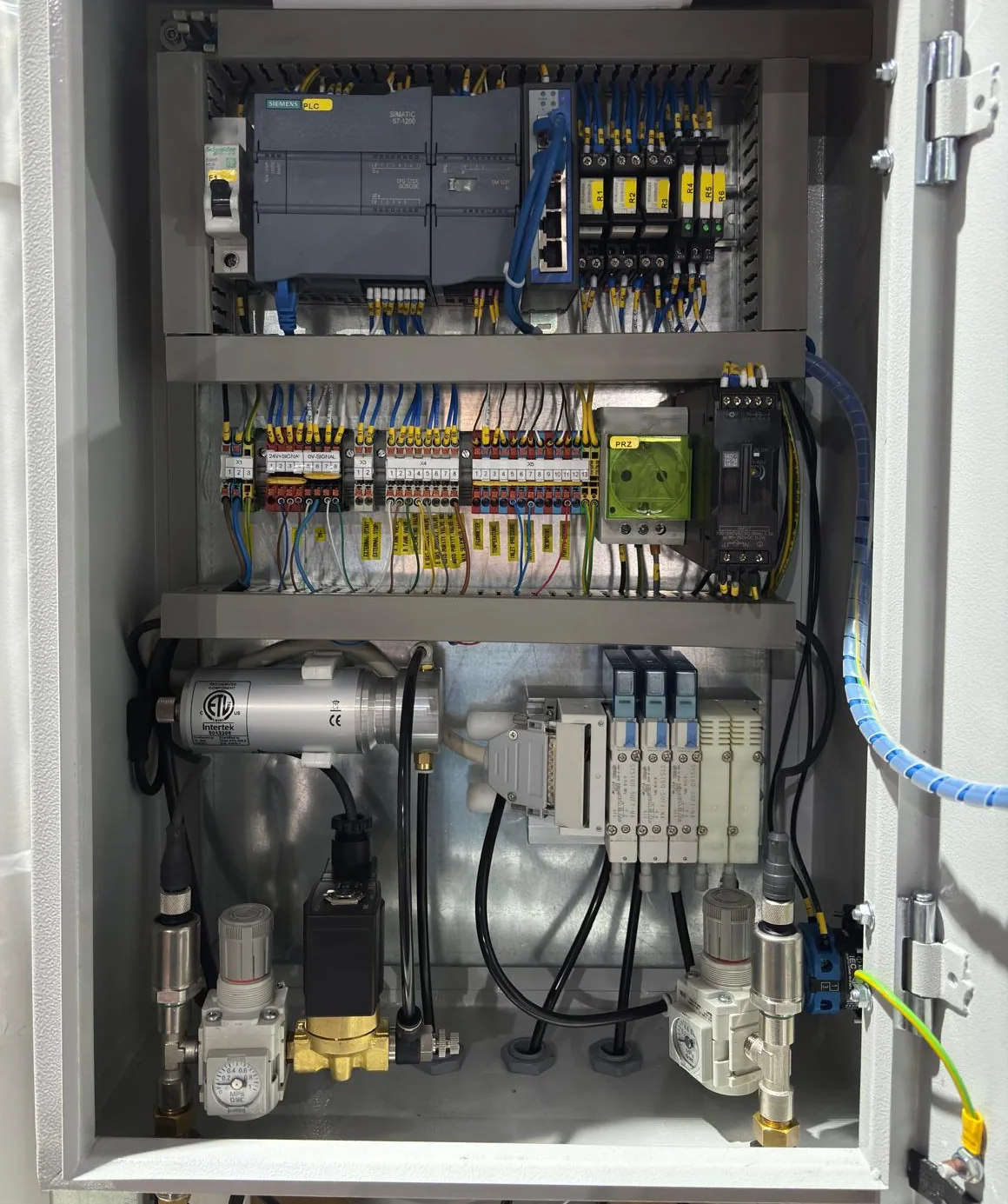
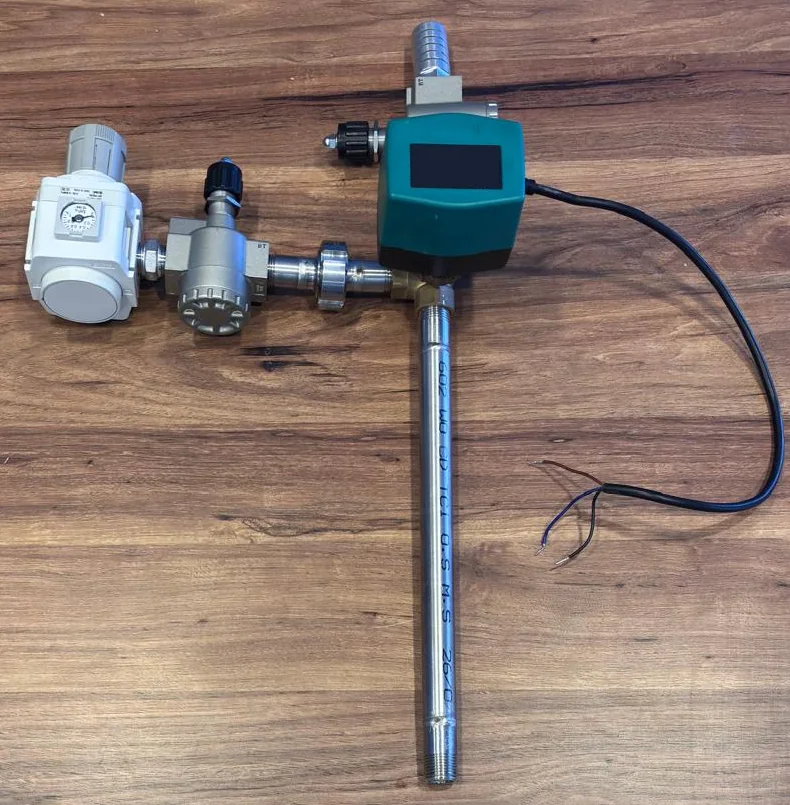
You provide the ozone; we provide the oxygen. We size the generator for your ozone generator's output and concentration, with analyser, purity control, tank and technical documentation. One platform for all your projects, and our support at commissioning.
It depends on the concentration it works at. As an order of magnitude, at 8–10 % by weight it takes 7 to 9 Nm³ of oxygen per kilo of ozone. We calculate it with your ozone generator's data: output, concentration and inlet pressure.
Between 90 and 95 %, which is exactly what a PSA generator delivers. The rest is mostly argon, which does not affect the ozone generator. What matters is that purity is stable and the gas arrives dry and clean.
Around 1.2 kWh per Nm³ of oxygen, almost all of it in the air compressor. That is why we size compressor and generator together, with a variable-speed drive when demand varies.
Yes, if it has enough capacity and the right quality. An oxygen generator uses 10 to 12 Nm³ of air per Nm³ of O₂. If your network is tight, a dedicated compressor for the oxygen plant is better.
It is toxic if inhaled, which is why it is never released: the off-gas goes through a destructor and the room has an ozone detector with alarm. In water it leaves no residue, because whatever does not react turns back into oxygen.
Because they depend on ozone output, concentration and whether you use your existing air network. After the study we give you a fixed quotation and the cost of your Nm³ of oxygen.
Tell us which ozone generator you have or what water you want to treat, and we will propose the oxygen plant.