After fermentation, oxygen is wine's main enemy: it oxidises aromas, alters colour and encourages the growth of microorganisms. Nitrogen, inert and tasteless, protects the wine at every stage, from harvest to bottle.
Producing it at the winery means having it the moment the process needs it, without depending on cylinders or bulk deliveries, at a fraction of the cost of external supply. And because it barely dissolves in wine, it changes neither its taste nor its carbonation.
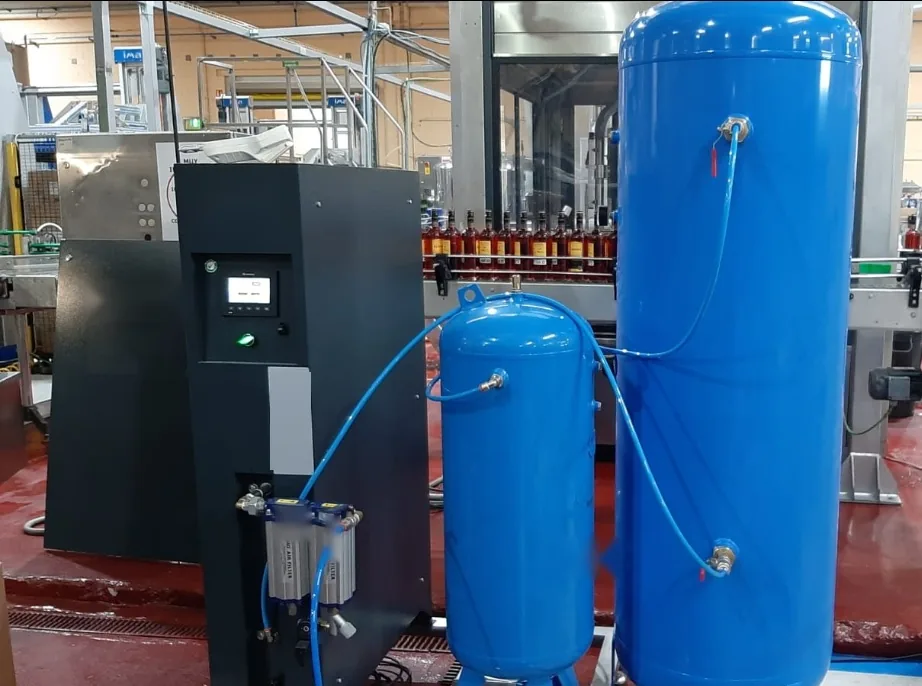
We produce it with a PSA generator using carbon molecular sieve (CMS), fed with compressed air treated for food use. See how it works and the full range in PSA nitrogen generators.

“Now, my friend, you’ll have a better wine.”
And that also pays for the generator, even if it never shows up on an invoice. It’s what we call invisible payback: less oxidation and more aroma preserved. The savings on cylinders can be calculated; this one you notice in the glass.
Each operation needs a different purity. The plant is sized for the most demanding one; the others benefit at no extra cost.
Closed pneumatic presses with an N₂ atmosphere for whites and rosés: limits must oxidation and preserves varietal aromas.
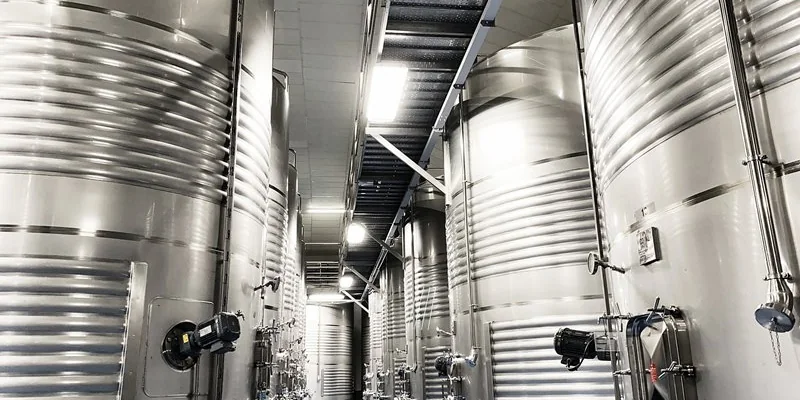
Purging empty tanks and protecting the headspace (blanketing) of partly filled ones.
Purging hoses, pumps and the receiving tank; pressurising tanks to move wine without a pump.
Nitrogen injection to break up and wet the cap of red wines during maceration, without adding oxygen.
N₂ bubbling to reduce dissolved oxygen and adjust CO₂ before bottling.
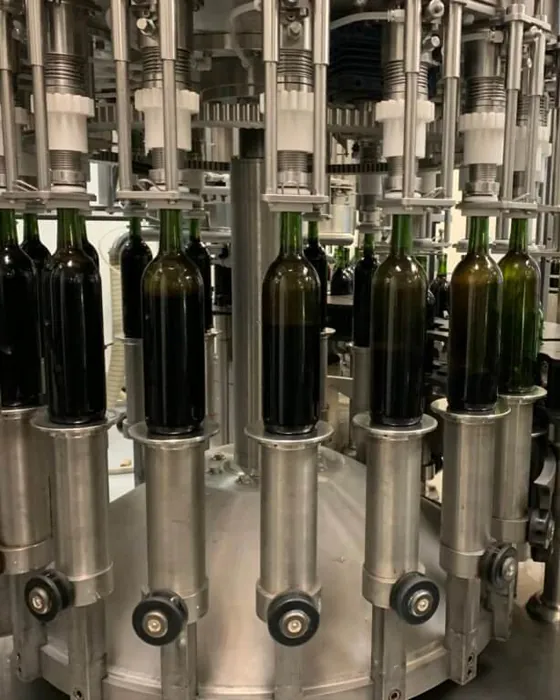
Bottle purging and N₂ injection into the headspace before capping, to extend shelf life.
Inerting of the base wine and tirage tanks, and protected transfers.
Headspace protection during ageing and topping-up.
Usual reference purities. We define your plant's purity with your winemaker, according to your wines and processes.
When a tank is purged, the incoming nitrogen mixes with the air inside and leaves carrying part of it. Oxygen does not disappear at once: it falls exponentially with every volume of N₂ that passes through.
After one volume of nitrogen, the tank still holds 8 % O₂. Getting down to 1 % takes almost four volumes. An empty 50 m³ tank uses around 185 Nm³ of N₂ for a full purge; that is why it pays to inert it while filling, displacing the air at the top as the wine comes in at the bottom.
In bottling, a 9,000 bottles/hour filler needs about 27 Nm³/h of N₂: some 3 litres per bottle for purging and headspace injection. This figure was measured at a Penedès sparkling-wine cellar.
O₂ in the headspace of a tank purged with 99.5 % N₂, assuming complete mixing. With a good purge design (inlet at the bottom, outlet at the top) somewhat less is needed.
We do not publish our customers' names, but we do publish the application, the area, the flows and what we did.
The generator was delivering half its flow: the dryer had stopped, water got in and saturated the activated carbon. Diagnosis the next day, repair and a proposal for a second generator for the new filler.
Expansion with a second PSA generator, shared storage and a single distribution network. The winery quadruples its capacity and gains redundancy.
Independent certification of nitrogen quality, with a digitally signed certificate ready for the auditor.
Compact skid-mounted plant next to the filler, with a sterile filter at the point of use and annual maintenance with the certificate included.

Nitrogen in contact with wine is a food additive, E 941, and its specification is set by Regulation (EU) No 231/2012. Food-safety standards (IFS, BRC, ISO 22000) also require you to prove that the gas reaching the wine complies.
That is why we certify the nitrogen quality of your plant with an independent, digitally signed report that cannot be altered and that you can hand straight to the auditor.
Measurements are taken with an oxygen analyser that is calibrated and holds a current calibration certificate, made by a company certified to ISO 9001 and ISO 22000, valid as evidence in IFS Food, BRC and ISO 22000 audits.

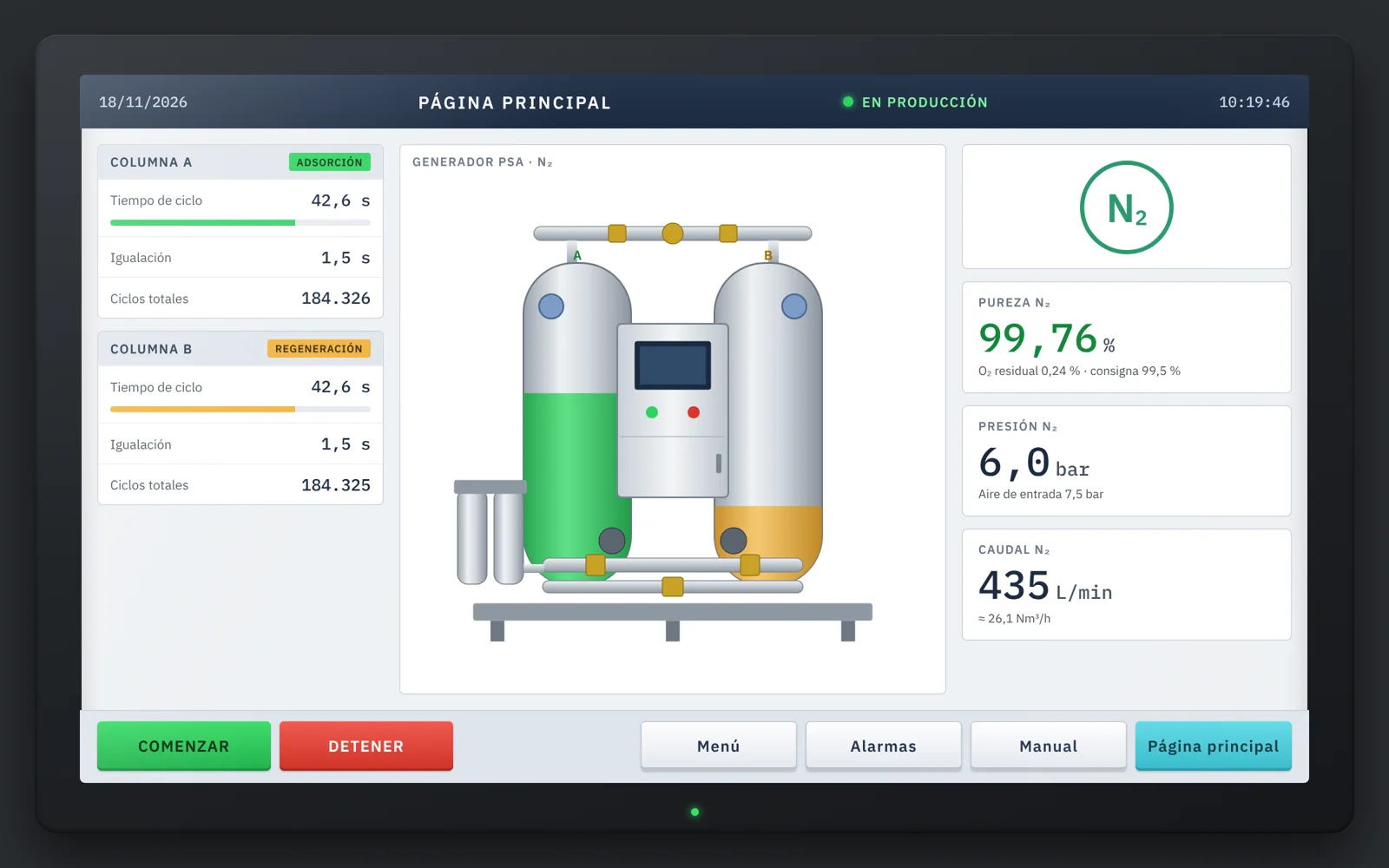
The generator monitors purity continuously. If residual O₂ exceeds the set point, the reject valve diverts the gas to vent, and off-spec nitrogen never reaches the wine.
For most operations (tank inerting, racking, pressing) 99–99.5 % is enough. For bottling, sparkling-wine tirage and the most oxidation-sensitive wines, 99.5–99.9 % is advisable.
Asking for more purity than needed makes nitrogen more expensive: every tenth requires more compressed air. The sensible approach is to size the plant for the most demanding operation and go no further.
Yes. Nitrogen is the food additive E 941, and Regulation (EU) No 231/2012 sets its specification, with a minimum purity of 99 %. A properly fed PSA generator meets it with margin.
What you must do is prove it: the inlet air must be treated for food use and purity must be measured and documented periodically.
Nitrogen is the cheapest to produce and barely dissolves in wine, which is why it is the reference gas for inerting, pushing and bottling. CO₂ is denser and forms a protective layer, but it dissolves in wine and changes its carbonation. Argon is even denser and insoluble, but much more expensive.
Many wineries use nitrogen for everything and keep CO₂ or N₂/CO₂ mixtures for specific adjustments, such as keeping the carbonation of a young white wine during sparging.
That is why we never size for average consumption. We calculate the harvest and bottling peak and cover it by combining the generator flow with an N₂ storage receiver that fills during low-demand hours.
If the winery grows, a second generator is added in parallel, which also provides redundancy. That is what we did at a large Penedès winery that went from 15 to 60 Nm³/h without stopping.
Mainly that of the air line: filters, dryer and drains, which protect the carbon molecular sieve (CMS). An annual generator inspection, O₂ analyser calibration and purity certification complete the plan.
It depends on what you pay for nitrogen today (cylinders, bundle rental, bulk and transport) and on your consumption. Tell us your data and we will calculate it.
Tell us about your tanks, your bottling line and how you buy nitrogen today. We come back with the plant you need and what you would save.