Each industry uses gas for different physical reasons: protecting a wine from oxygen, stopping a cut edge from oxidising, inerting a silo so it does not explode. Understanding that reason is what lets us set the right purity, flow and regulations.
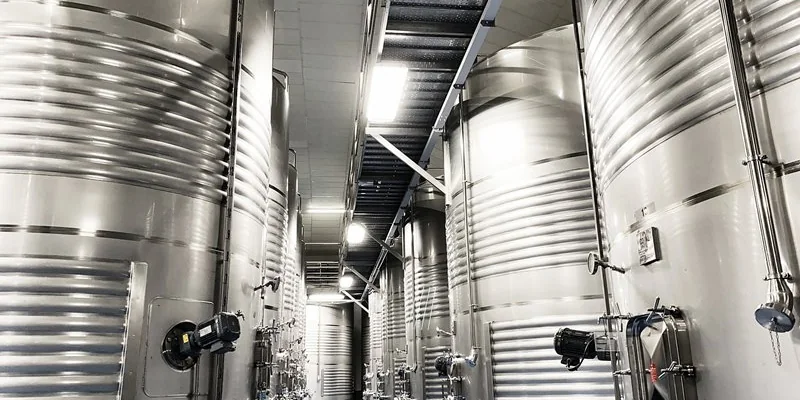
Oxygen is wine's main enemy after fermentation: it oxidises aromas, alters colour and favours the growth of microorganisms. Nitrogen, inert and tasteless, protects the wine at every stage, from harvest to bottle.
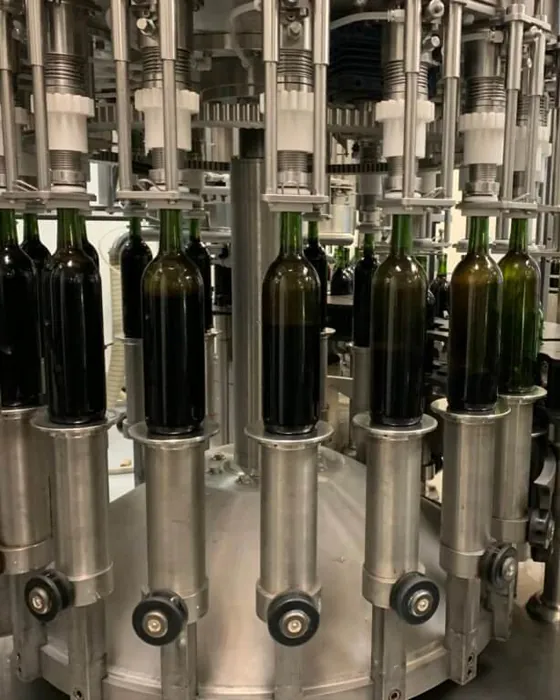
We generate it at your winery for inert pressing, tank inerting, racking, stripping, bottling and cava tirage. E 941 nitrogen from 99 to 99.9 %, with annual purity certification.
Nitrogen displaces the oxygen that oxidises fats, aromas and colours and lets aerobic microorganisms grow. That is why it is present in practically every stage of food processing: storage, transfer, packaging and preservation. Gas quality is a critical food-safety factor and has a direct impact on operating costs.
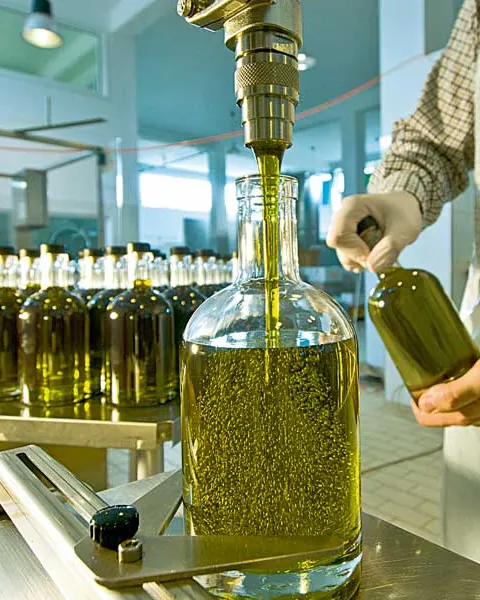
Olive oil
Oxygen is responsible for oil oxidation: it raises the peroxide value and the K₂₃₂ and K₂₇₀ values, degrades polyphenols and dulls the fruity attributes. An extra virgin oil can lose its commercial category through poor storage.
Nitrogen is applied to the headspace of storage tanks after decanting, during racking and filtration, and at packaging, dosed into the bottle or can before closing.
Usual purity: 99–99.5 %
Beer
In brewing, dissolved oxygen in the final product is controlled in parts per billion: usual targets are below 50–100 ppb, because oxygen accelerates staling and cardboard off-flavours.
Nitrogen purges and pressurises lagering and bright-beer tanks, pushes beer between tanks and purges filling lines. Being much less soluble than CO₂, it moves the product without altering its carbonation and reduces dependence on bought-in CO₂. It is also used in N₂/CO₂ mixtures for creamy-headed “nitro” beers.
Usual purity: 99.5–99.9 %
Juices and drinks
In juices, oxygen destroys vitamin C, darkens the colour and weakens the aroma. After deaeration, nitrogen sparging (stripping) removes the remaining dissolved oxygen.
Juices are stored in aseptic tanks under an N₂ atmosphere and packed with an inerted headspace, extending shelf life without additives.
Usual purity: 99–99.5 %
Modified atmosphere packaging (MAP)
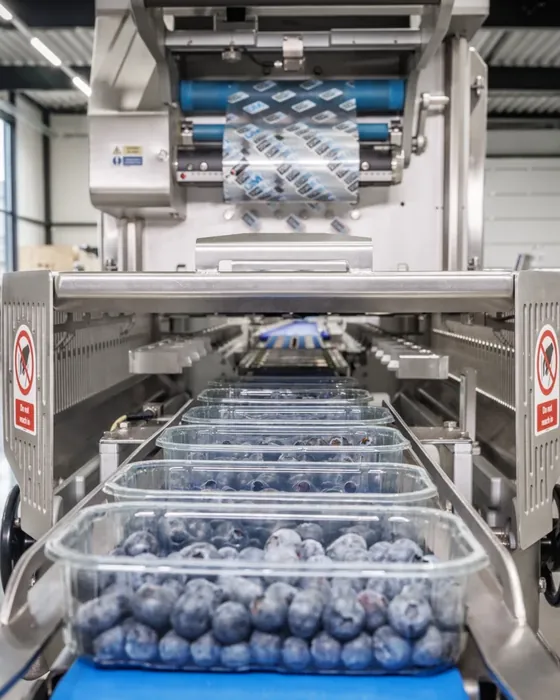
The air in the pack is replaced by a gas mixture suited to each product: N₂/CO₂ for cured meats, cheeses, fresh pasta, bakery and ready meals; O₂/CO₂ for fresh red meat. CO₂ inhibits bacteria and moulds, while inert N₂ displaces oxygen and acts as a filler gas so the pack does not collapse.
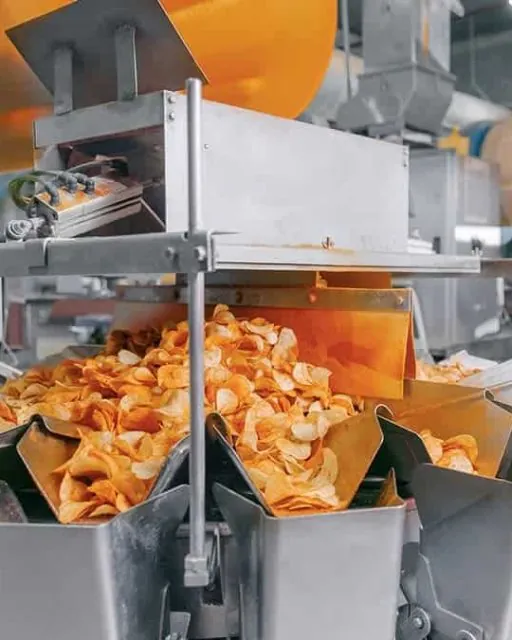
Snacks, crisps and nuts are packed with practically pure N₂: it prevents the fats from going rancid and cushions the product during transport.
Residual O₂ in the pack: usually below 1–2 %
Coffee and powdered products
Roasted coffee, whole bean or ground, loses aroma and oxidises within days in contact with air. It is packed in bags with a degassing valve or in N₂-flushed capsules.
Milk powder and infant food are packed in inerted cans to protect fats and vitamins throughout their shelf life.
Residual O₂ in the pack: below 1–2 %
Silos, hoppers and process air
Flour, sugar, cocoa and cereals form explosive dust clouds. Inerting silos, hoppers and mills with N₂ keeps oxygen below its limiting concentration and is an explosion-protection measure (ATEX).
Compressed air in contact with the product or packaging must comply with ISO 8573-1, with oil class 1.
Usual purity: 95–99 % depending on the limiting oxygen concentration
Usual purity: 99–99.9 % depending on the product. E 941 food-grade nitrogen (Regulation (EU) No 231/2012).
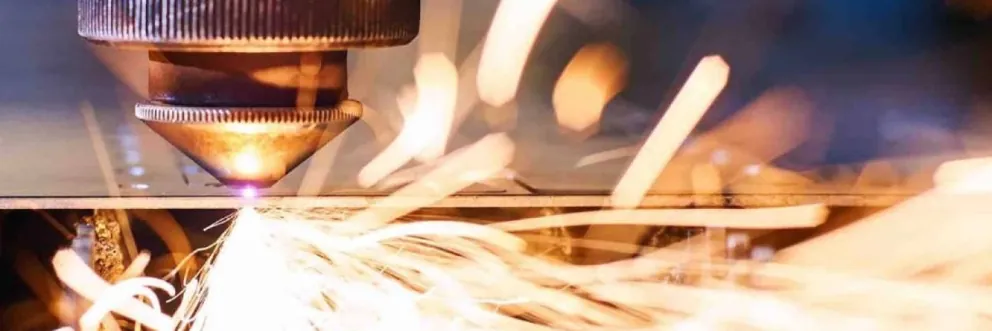
Laser cutting is one of the most demanding applications for gas quality and flow. With nitrogen as the assist gas, the material is melted and blown out without oxidising: the edge is clean, bright and ready to weld or paint, with no further cleaning.
Stainless steel and aluminium: N₂ from 99.95 to 99.999 % depending on thickness and finish; oxide-free stainless needs the upper band
High pressure: PSA generator with booster and storage in cylinder bundles at 300 bar to cover the cutting head's consumption peaks
Carbon steel: technical O₂ as cutting gas, or N₂ when an oxide-free edge is wanted
Savings: compared with cylinder or liquid supply, on-site N₂ cuts the cost per Nm³ very significantly
Purity, pressure and flow are sized from each machine's real cutting parameters.
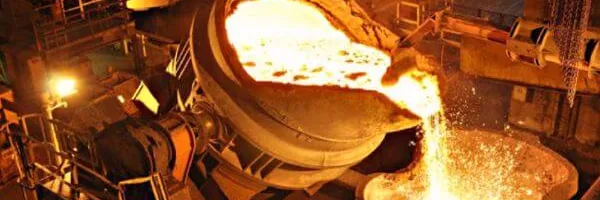
In the iron, steel and metalworking industry, nitrogen acts as a protective atmosphere against the oxygen, moisture and CO₂ in air, which oxidise and decarburise metal at high temperature. It displaces oxygen, breaks the fire triangle and removes the risk of explosion in furnaces and process enclosures.
Heat treatment: bright annealing, hardening, tempering, brazing and sintering of steel, copper and aluminium, as the base gas of furnace atmospheres
Carburising and nitriding: N₂ as carrier and purge gas in controlled atmospheres, replacing endothermic gases
TIG/MIG welding and pipe purging: protection of the weld bead and root (backing) on stainless steel pipe
Aluminium: refining and degassing of molten metal, and die cooling in extrusion: less oxide, better finish and faster extrusion
Steelmaking: inert atmosphere in continuous casting and vacuum degassing of molten steel
Usual purity: 99.9–99.999 %, with a low dew point (≤ −40 °C) in furnace processes.
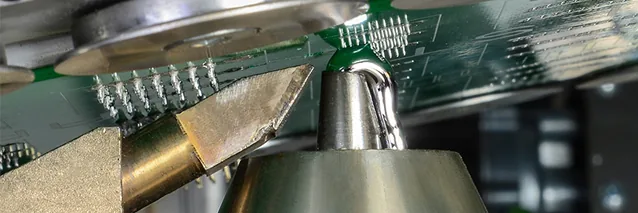
Ever smaller and more powerful devices, lead-free soldering and no-clean fluxes: electronics works within narrow process windows. Replacing air with nitrogen in soldering prevents oxidation of tracks, leads and alloy, improves wetting and reduces defects in board (PCB) assembly.
Solder quality depends directly on the residual oxygen in the atmosphere: with nitrogen, dross formation in wave soldering falls by 70 % to more than 95 %, depending on residual oxygen (from 10,000 to under 100 ppm). Defects such as insufficient, short or drained joints drop drastically compared with soldering in air.
Wave and selective soldering: less dross and tin consumption, less bath cleaning and maintenance, less flux per board
Reflow ovens: controlled residual oxygen in the oven; better wetting, stronger joints and “no-clean” processes
Semiconductors and assembly: copper wire bonding, thermal cycling chambers and process inerting
Moisture-sensitive devices (MSD): dry nitrogen cabinets with controlled dew point
Usual purity: 99.99–99.999 % (residual O₂ from 100 to 10 ppm), depending on the process and oven. Typical payback of a PSA generator: under 2 years.
Nitrogen is the basis of safety and quality in chemical processes: it inerts reactors, tanks and mixers, prevents oxidation reactions and removes the risk of explosion in atmospheres with vapours or dust. In the laboratory, on-site generation provides continuous gas, with no cylinder changes or interruptions halfway through an analysis.
Inerting and blanketing: reactors, mixers and tanks during loading, unloading, shutdowns and storage, according to the ATEX document
Milling and micronisation: inert atmosphere in mills to prevent explosion of the dust generated
UV curing under N₂: paints, varnishes, resins and adhesives: fewer photoinitiators and longer lamp life
Regeneration: of saturated activated-carbon filters and catalysts; line purging and drying
Laboratory: sample concentration (N₂ evaporators), LC-MS mass spectrometry, glove boxes and O₂-controlled incubators
Usual purity: 95–99.5 % for inerting (depending on the product's limiting oxygen concentration) and 99.5–99.999 % in the laboratory.
In pharma, nitrogen that comes into contact with the product — inerting of reactors and tanks, liquid transfer, vial and blister packing, freeze-drying — must meet the monograph of the European Pharmacopoeia and be managed under GMP as a critical process material.
Qualification: IQ, OQ and PQ of the generator and the distribution network up to the point of use
Point of use: 0.2 µm sterile filtration and stainless steel pipework with sanitary connections
Continuous control: O₂ and dew point analyser with data logging and alarms; automatic rejection of off-spec gas
Periodic verification: sampling and analysis against the monograph; record traceability for audits with GAS4U
Parameter (Ph. Eur., “Nitrogen” monograph)
Limit
N₂ content
≥ 99.5 % V/V
Oxygen (O₂)
≤ 50 ppm V/V
Carbon dioxide (CO₂)
≤ 300 ppm V/V
Carbon monoxide (CO)
≤ 5 ppm V/V
Water (H₂O)
≤ 67 ppm V/V
The oxygen limit is what drives the design: with a PSA generator it means working at residual O₂ ≤ 50 ppm, i.e. at a purity of 99.995 % or higher, not the 99.5 % the minimum content suggests. Reference values; always check the current edition of the monograph.