A well-installed nitrogen generator can run for years without trouble. That is exactly why it gets forgotten. And when purity drops, it is almost never the generator's fault: the problem started months earlier, in the air reaching it. This is the list of what we check every year, in the order the gas travels.
1. Compressed air
It all starts at the compressor. We check inlet pressure and its stability, condensate drains and network leaks. A PSA generator sized for 7.5 bar that receives 6.5 bar produces less flow and, if asked for the same flow, less purity.
2. Filtration
Particle filter, coalescing oil filter and, often, an activated carbon tower. We measure the differential pressure across each stage: when it rises, the cartridge is clogging. Changing it in time is cheap; waiting lowers inlet pressure and lets oil through towards the sieve.
3. The dryer
The most critical point and the most forgotten. If the dryer stops, water reaches the carbon molecular sieve (CMS), fills its pores and capacity drops. We check the real dew point, the refrigeration or adsorption circuit and the automatic drains. A dryer that stops in summer can cost the entire sieve.
4. The generator
- Cycle and equalisation times. We compare each column's pressures during the cycle: a column that doesn't reach pressure reveals a valve or a leak.
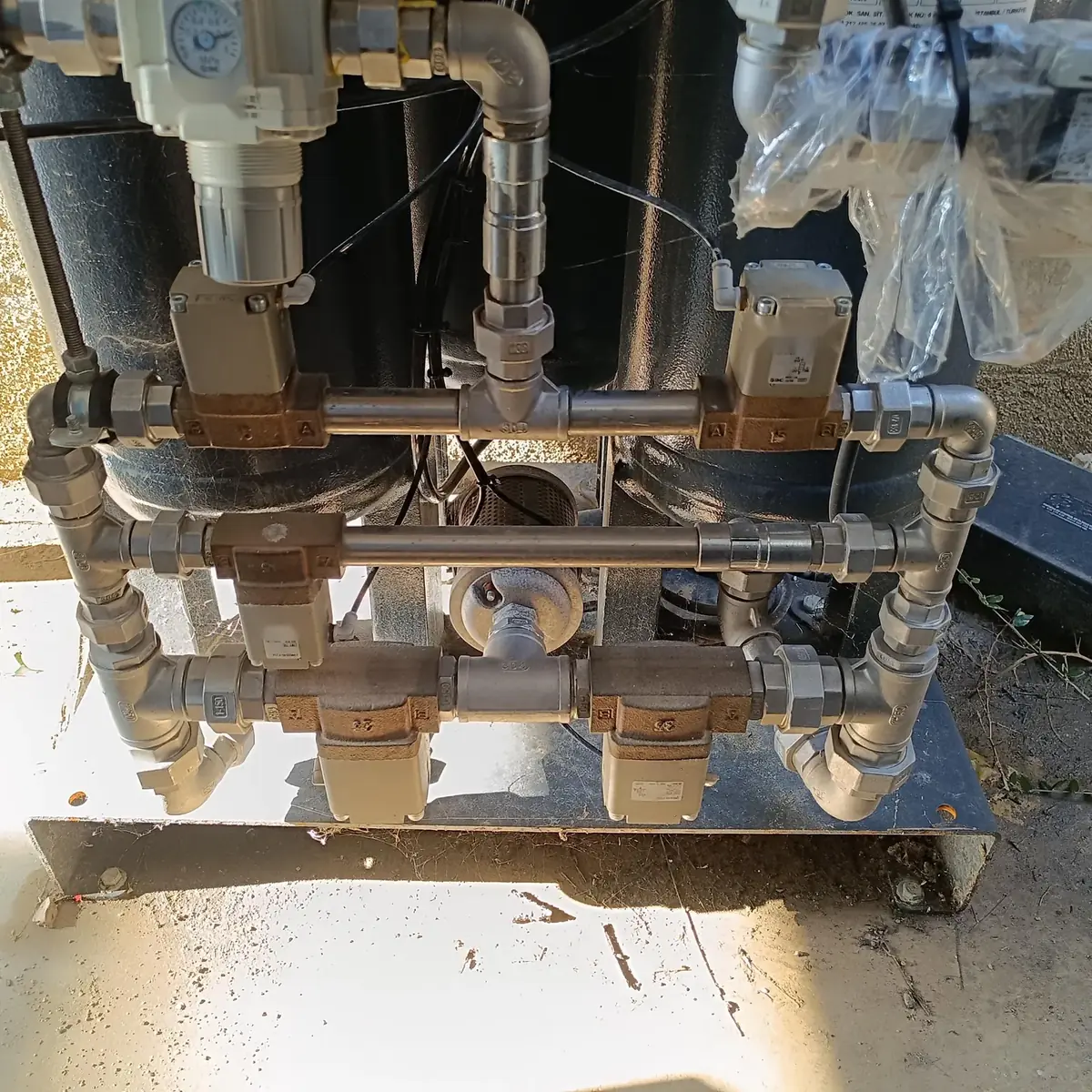
- Process valves. Each tower opens and closes hundreds of times a day. A valve that doesn't close fully lowers purity without raising any alarm.
- The sieve. Black dust in the silencers is a sign the CMS is compacting or breaking down.
- Purity versus flow. We check the generator delivers nominal purity at nominal flow, not just at no load.
5. Analyser and control
The generator's oxygen analyser decides whether the gas goes to the line or is vented. If it measures wrongly, nothing else matters. We check its calibration, setpoints, alarms and reject valve, and download the PLC logs.
6. Tanks and points of use
Pressures, safety valves and the condition of final filters. In food and wineries, the sterile filter at the point of use is the last barrier before the product, and it has its change interval too.
Why certify the nitrogen
Nitrogen in contact with food is an additive, E 941, and Regulation (EU) No 231/2012 sets its minimum purity. In an IFS Food, BRC or ISO 22000 audit, the auditor may ask for evidence that the gas complies. And the reading from the generator's own analyser is not enough: it is the instrument being verified.
That is why, once a year, we measure purity with an independent, calibrated analyser, compare its reading with the generator's and issue a digitally signed certificate for the auditor's file. If the two readings don't match, you know before the auditor does. We explain it in more detail in nitrogen quality certification.
In short
Checking only the generator is checking half the plant. Purity is decided in the incoming air, the dryer and the analyser that watches it. A complete annual check, with certified purity, costs far less than a new sieve or a non-conformity at audit. You can see our plans under maintenance.