The heart of the generator is a pair of columns filled with carbon molecular sieve (CMS): a carbon with a network of micropores of almost molecular size. Oxygen and nitrogen both fit into those pores, and at equilibrium CMS adsorbs similar amounts of each. The difference is time.
The O₂ molecule has a slightly smaller kinetic diameter (0.346 nm versus 0.364 nm) and diffuses into the micropores tens of times faster than N₂. If adsorption is stopped in time, before nitrogen gets in, the CMS has captured the oxygen — together with water vapour and CO₂ — while nitrogen leaves the top of the column. It is a kinetic separation.
That is why PSA nitrogen cycles are short, around one minute per column: if they run longer, the oxygen front reaches the outlet and purity drops.

“Have you noticed what your cylinders really cost you?”
Rental, transport and the risk of high pressure in your building. And on top of that, the cylinder goes back while it still holds 4 bar: 4 bar × 50 litres is 200 litres of nitrogen you paid for and never used, in every cylinder. Keep cylinders for exceptional cases and switch to the sound economics of producing your own nitrogen.
While one column produces nitrogen under pressure, the other is depressurised and cleaned. After about a minute they swap roles, and the product buffer absorbs the change so that the flow to the process is continuous.
Air enters at the bottom at 8 bar(g). O₂, moisture and CO₂ diffuse into the CMS micropores; nitrogen passes through the column and leaves at the top towards the buffer tank.
Before the oxygen front reaches the outlet, the valves connect both columns. The pressurised one passes gas to the one about to start: less compressed air per cycle.
The saturated column is opened to atmosphere through the silencer. As pressure falls, the CMS releases the oxygen it had retained.
A small share of the product nitrogen sweeps the column counter-current and carries away the residual oxygen. The column is ready for the next cycle.
Higher purity means stopping adsorption earlier, leaving more margin between the oxygen front and the outlet, and purging more. As a result, each Nm³ of nitrogen needs more compressed air — and the compressor is by far the largest electricity consumer in the plant.
An example: 20 Nm³/h of N₂ at 99.5 % needs about 58 Nm³/h of air. At 99.9 %, 66 Nm³/h. At 99.999 %, 132 Nm³/h: twice the compressor for the same nitrogen.
That is why every project starts by asking what purity your process really needs.
Nm³ of compressed air at 8 bar(g) per Nm³ of N₂ produced.
| N₂ purity | Residual O₂ | Residual O₂ (ppm) | Grade | Air / N₂ |
|---|---|---|---|---|
| 95 % | 5 % | 50,000 | — | 1.8 |
| 97 % | 3 % | 30,000 | — | 2.1 |
| 98 % | 2 % | 20,000 | — | 2.3 |
| 99 % | 1 % | 10,000 | 2.0 | 2.5 |
| 99.5 % | 0.5 % | 5,000 | 2.5 | 2.9 |
| 99.9 % | 0.1 % | 1,000 | 3.0 | 3.3 |
| 99.99 % | 0.01 % | 100 | 4.0 | 4.6 |
| 99.995 % | 0.005 % | 50 | 4.5 | 5.8 |
| 99.999 % | 0.001 % | 10 | 5.0 | 6.6 |
The grade gives the number of nines: 5.0 = 99.999 %. In a PSA generator, purity is expressed as 100 % minus the measured residual O₂; argon is counted together with nitrogen.
Each model is named after its flow at 99 %. Choose the purity you need to see the flow of every model and the compressed air it uses. Not sure where to start? Try the “Which model do I need?” tab.
| Model | Flow | Compressed air Nm³/h | Connections air / N₂ |
|---|
Flows in Nm³/h with inlet air at 8 bar(g), 20 °C and ISO 8573-1 [1:4:1] quality. At other inlet pressures or temperatures the flow changes: we calculate it for your conditions. “Compressed air” is the generator consumption at full output. For larger flows we design units in parallel.
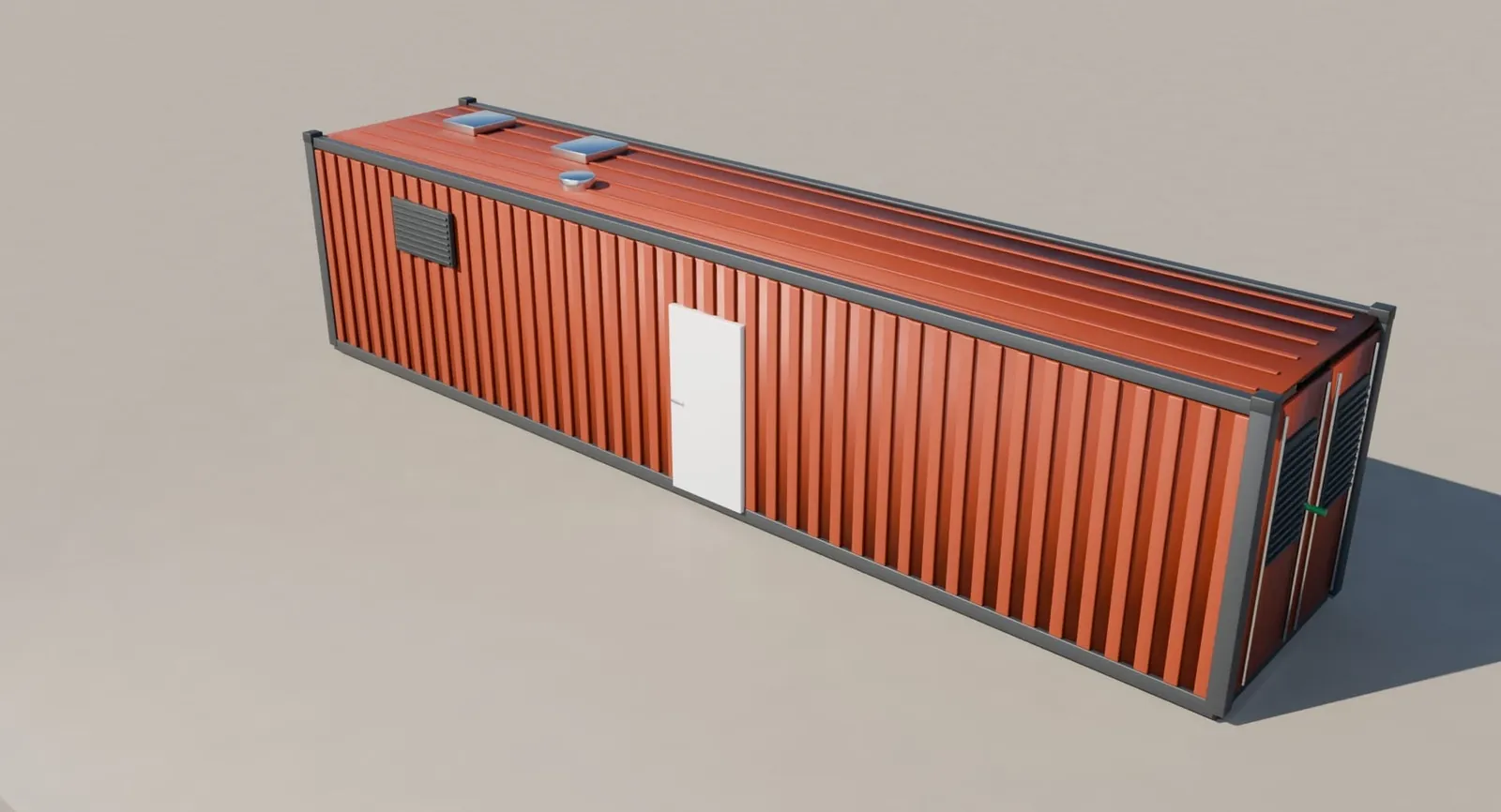
Every RAV-N model, also turnkey.Supplied assembled in a 40 ft container or on a compact skid, tested before delivery.See turnkey plants →
Carbon molecular sieve is robust, but it has two enemies. Compressor oil settles at the mouth of the micropores, and the loss of capacity is irreversible. Liquid water floods the pores and carries sieve fines along.
That is why we design the air line with the same care as the generator: drying, three-stage filtration and, with lubricated compressors, activated carbon. And we watch temperature: rated performance is given at 20 °C, and CMS loses capacity when the air comes in warmer.
| Parameter (ISO 8573-1) | Class | Requirement |
|---|---|---|
| Solid particles | 1 | filtration ≤ 0.01 µm |
| Pressure dew point | 4 | ≤ +3 °C |
| Total oil | 1 | ≤ 0.01 mg/m³ |
| Inlet pressure | — | 8 bar(g), stable |
| Inlet temperature | — | ideally 20 °C |
Sized with the air/N₂ factor of your purity.
Refrigerated or desiccant, depending on dew point.
Particulate, coalescing and activated carbon.
Stabilises the inlet pressure.
Two CMS columns and cycle control.
Absorbs peaks and column changeovers.
Continuous residual O₂ and reject if off-spec.
If your process needs more pressure than the generator delivers (laser cutting, cylinder filling), we add a booster after the N₂ buffer.
Tank inerting, racking, bottling and line purging to protect wine from oxidation.
Inert headspace in tanks and packaging: slows oxidation and preserves polyphenols and aroma.
Clean, oxide-free cuts in stainless steel and aluminium. At high pressure, with a booster.
Modified atmosphere (MAP) for snacks, coffee, nuts and ready meals.
Reactor and tank inerting, safe pneumatic conveying and drying.
Wave and reflow soldering with fewer oxides and less dross.
Whatever your process requires, and not a tenth more. Wineries and olive oil plants usually need 99–99.9 %; modified-atmosphere packaging 99–99.9 %; laser cutting of stainless steel and aluminium 99.95–99.999 %.
Over-specifying purity is expensive: going from 99.5 % to 99.999 % multiplies the compressed air per Nm³ of nitrogen by 2.3.
It depends on purity: from 1.8 Nm³ of air per Nm³ of N₂ at 95 % up to about 6.6 Nm³ at 99.999 %, with air at 8 bar(g). The selector on this page calculates it for every model.
The compressor is by far the largest energy consumer in the plant, so choosing the right purity is the decision with the biggest impact on the cost per Nm³.
With properly treated air and well-packed columns, CMS keeps its performance for many years: more than ten is common in well-maintained plants.
What shortens its life is oil and liquid water carried over from the compressor, and abrasion of the sieve itself if it loses compaction. That is why drying and filtration are not accessories: they are part of the generator.
Yes, provided the inlet air is treated for food use and purity is controlled and documented. For IFS, BRC or ISO 22000, a periodic, independent certification of the gas is advisable.
We provide that certification with a digitally signed certificate. See nitrogen certification.
Membranes are compact and simple, but lose efficiency above 99–99.5 %. From there on, and for medium and large flows, PSA with CMS uses less air per Nm³.
Yes. PSA generators can be installed in parallel, and a well-designed plant leaves connections, air capacity and space ready to grow.
Because a generator does not work alone: the real price depends on the compressor, drying, filtration, receivers, installation and, if needed, the booster. After the study we give you a firm quotation for the complete plant and the cost of your Nm³.
Producing at 99.5 % and purifying with hydrogen generated on site uses around 40 % less energy than asking the PSA for 99.999 % directly.
≈ 6.6 Nm³ of air per Nm³ of N₂.
≈ 2.9 Nm³ of air per Nm³, plus a little hydrogen from water.
Tell us your consumption and the purity you need. We come back with the model, the compressor and the cost per Nm³ compared with what you pay today.